


















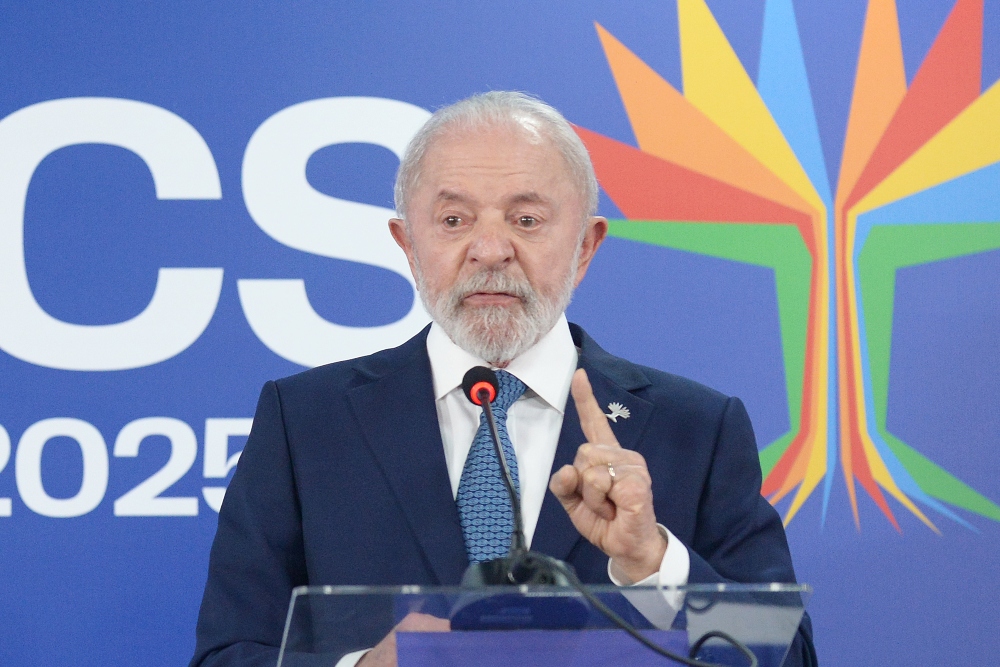
The President of Brazil wants to elevate the fight against gambling harm in the country by bringing an end to online casinos.
President Luiz Inácio Lula da Silva made the proclamation as part of a public speech for International Women’s Day at the weekend. Lula made iGaming legal in the country with the signing of legislation at the end of 2023.
Regulated iGaming and online sports betting have been operational in Brazil since the regulated market launched in January 2025.
However, land-based casinos are not prohibited. President Lula believes online casinos should be brought in line with their physical counterparts to help combat gambling harm.
President Lula stated: “Another tragedy affecting Brazilian homes is gambling addiction. Although most addicts are men, the burden falls disproportionately on women. It’s money meant for food, rent and children’s school that disappears on the cell phone screen.
“Casinos are prohibited in Brazil. It makes no sense to allow gambling games like Jogos do Tigrinho to enter homes, indebting families through cell phones.”
Jogos do Tigrinho is a Fortune Tiger slot game in Brazil. President Lula promised that the government would work together to make sure that online casinos in the country are brought under control.
“We will work together, uniting the government, congress and the judiciary, to prevent these digital casinos from continuing to indebt families and destroy homes,” added President Lula.
Arguments for land-based regulation
While President Lula wants online casinos to be in line with their land-based counterparts, some wish for physical casinos to be legalised, as they can bring additional benefits.
In a recent conversation with iGaming Expert, Fabio Tiberia, Vice President of Brazil at VBet, emphasised that a regulated land-based casino market with integrated resorts can help boost tourism in the country and reposition it as a year-round entertainment destination.
However, Tiberia also believes safer gambling regulation needs to be on point if land-based casinos are legalised, to make sure players are protected.
Tiberia said: “Safer gambling must expand structurally, not symbolically. Land-based casinos require trained staff to detect risk behaviour, visible on-site support, self-exclusion systems integrated with online platforms and cross-channel monitoring.
“Responsible gaming must become an operational culture, not just compliance. Sustainable growth depends on protecting players and maintaining public trust.”
He continued: “Broad exclusions based purely on residency would likely be ineffective and counterproductive. The real focus should not be on nationality, but on player behaviour and risk exposure. Ludopathy is linked to vulnerability patterns, not citizenship. A modern framework should prioritise behavioural monitoring, early detection systems, mandatory self-exclusion registers, spending limits and on-site intervention protocols.
“Protecting players means identifying problematic patterns early and acting decisively, both in land-based and online environments. Inclusion within a regulated system, supported by strong responsible gambling controls, is far safer than pushing domestic players toward unregulated markets where there is no protection, no monitoring and no support for addiction.”
The future of iGaming in Brazil was recently discussed on an episode of iGaming Daily at SBC Summit Rio.